
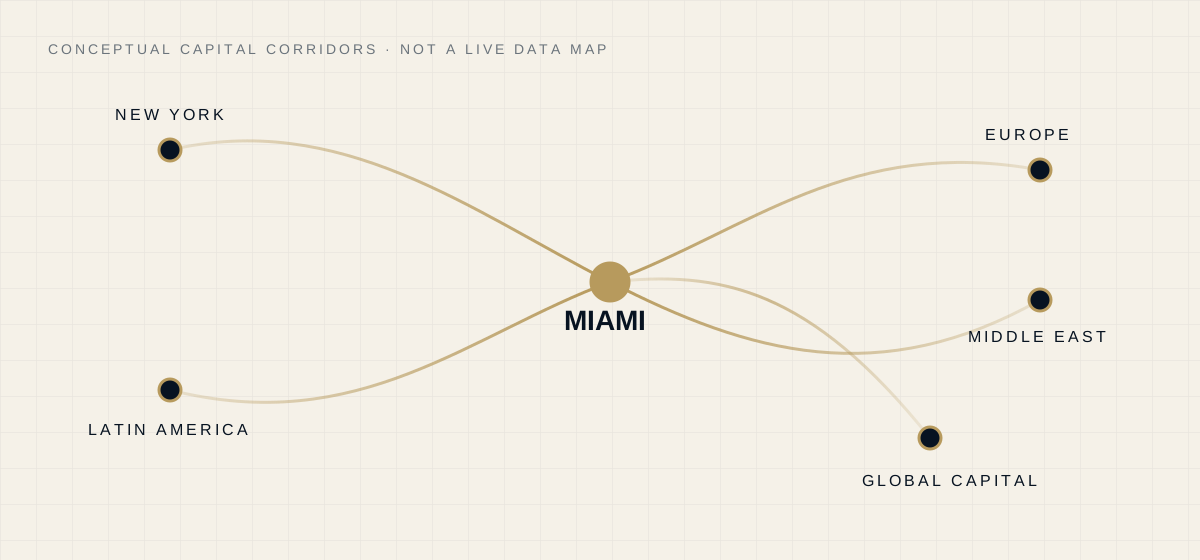
Miami has long connected North American property with Latin American capital. What is changing is the infrastructure around that relationship: private wealth, institutional finance, digital assets, technology companies and global events are converging in the same market.
The Miami advantage
- Real estate remains a tangible destination for global capital.
- The city is increasingly relevant to finance, technology, media and culture.
- Local execution still determines whether global narratives become real transactions.
Property remains the anchor.
The National Association of REALTORS® reported that Florida captured 21% of foreign U.S. home purchases in its 2025 international-transactions report, extending the state’s long run as the top destination for international buyers. The underlying attraction is not simply weather. It includes property rights, lifestyle, connectivity and a deep network of professionals who understand cross-border transactions.
At the same time, Miami is hosting increasingly significant gatherings in institutional real estate, payments, AI and digital finance. Sibos 2026 will bring Swift’s global banking network to Miami under the theme “Digital finance for AI-driven economies.” That is not separate from the property story. It is part of the capital environment in which Miami real estate now operates.
Miami is where old capital meets new rails—but the deal still has to close locally.
Local knowledge becomes more valuable, not less.
Technology can improve discovery, communication, payments and settlement. It cannot replace the local judgment required to understand zoning, condominium risk, insurance, title, neighborhood economics, development execution and buyer behavior.
The next Miami advantage will belong to people who understand both sides: the physical market and the financial infrastructure increasingly moving around it.